Cozy Fall Decor on a Budget: Texture Layering & Organic Accents
This post may contain affiliate links. For more information, please see our disclosure policy.
Bouclé and rattan, wool and velvet, jute and wood. Look no further than texture layering for an elevated (and budget-friendly) fall update.
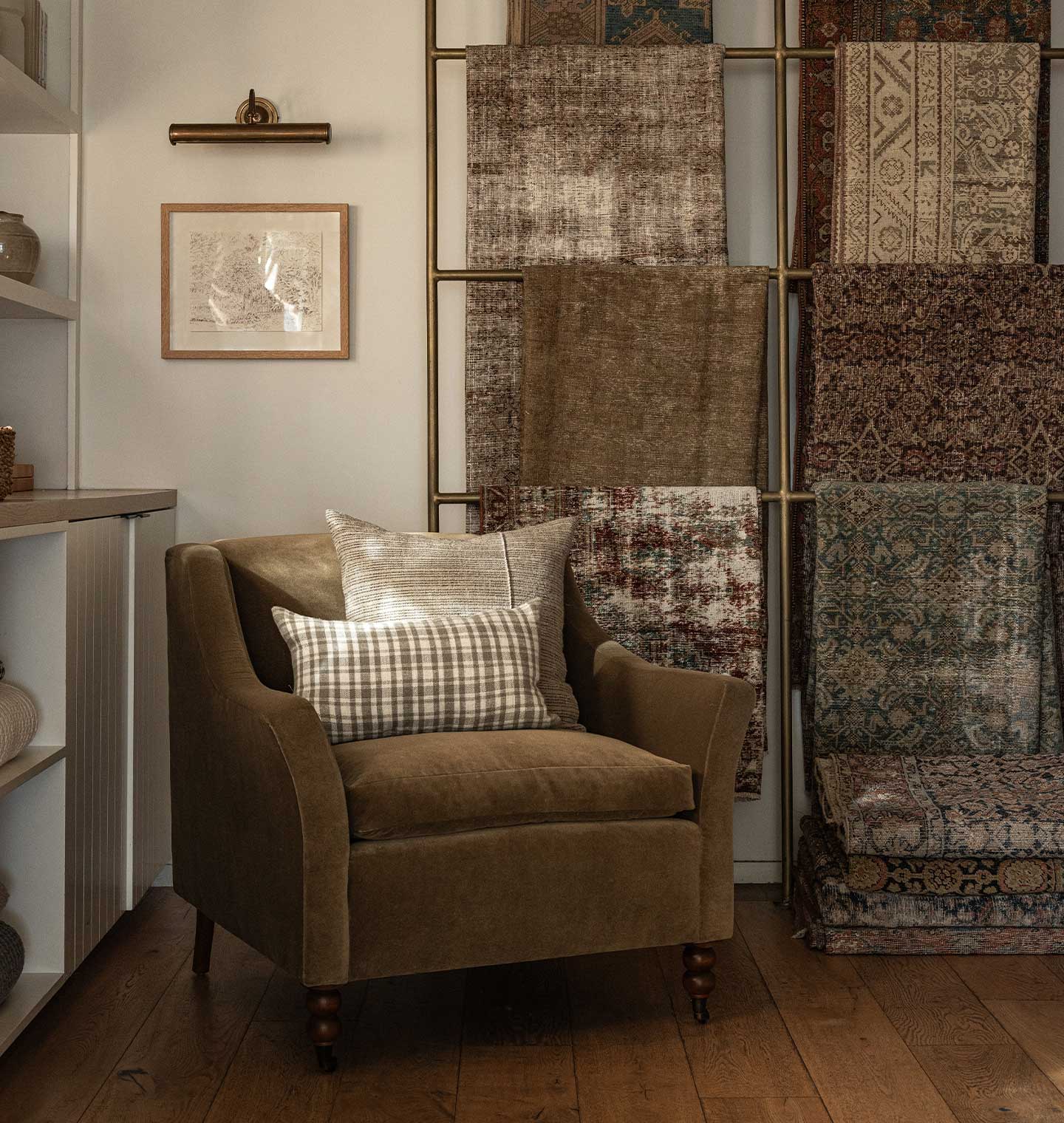
Want a cozy fall vibe, but your budget says otherwise? Worry not! Creating a warm and layered space for fall doesn’t require a shopping spree or a complete room overhaul, but savvy decor choices. The trick? Texture layering combined with smart options that make every piece earn its keep.
In this post, you’ll learn exactly what texture layering is, why it dominates fall decor, and how to pull it off in your own space without overspending. We’ll cover the basics, walk through budget-friendly ideas for every room, and share some stunning finds and DIY projects.
Now, y’all, before we jump straight into the nitty-gritty of texture layering, let’s first define what it is.
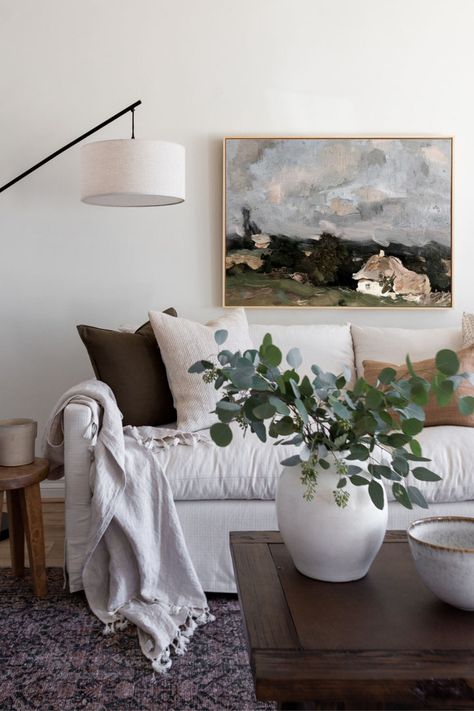
Texture layering means pairing different materials together. For example, a chunky knit throw over smooth leather, a woven basket under a glass table, or a rough wooden bowl on a linen runner. It’s a play of opposite contrasts that together create depth, visual interest, and read as expensive, even when it’s not.
Cozy Fall Decor: Why Texture Layering Works for Fall
Texture layering combines different materials, weaves, and finishes in one space to add dimension. Instead of relying on orange and burgundy to signal fall, you’re using how materials feel and how they look when they catch light. A nubby wool pillow next to a smooth ceramic. A cable-knit throw tossed over sleek wood. Woven baskets under a glass table.
The greatest thing about texture layering is that with a couple of swaps and savvy choices, it works with what you already own. You’re not repainting or buying new furniture—you’re introducing varied surfaces that play off each other.
The texture does the heavy lifting. It adds high-end details without adding more colors, complexity, without clutter, making even the simplest palette feel intentional.
The 2025 Texture Trend
So what textures are having their moment this fall? Chunky knits are everywhere—oversized throws, cable-knit pillow covers, anything that makes you want to reach out and touch it!
Velvet’s back too, but we’re talking muted jewel tones and earthy neutrals that add richness without feeling too over-the-top.
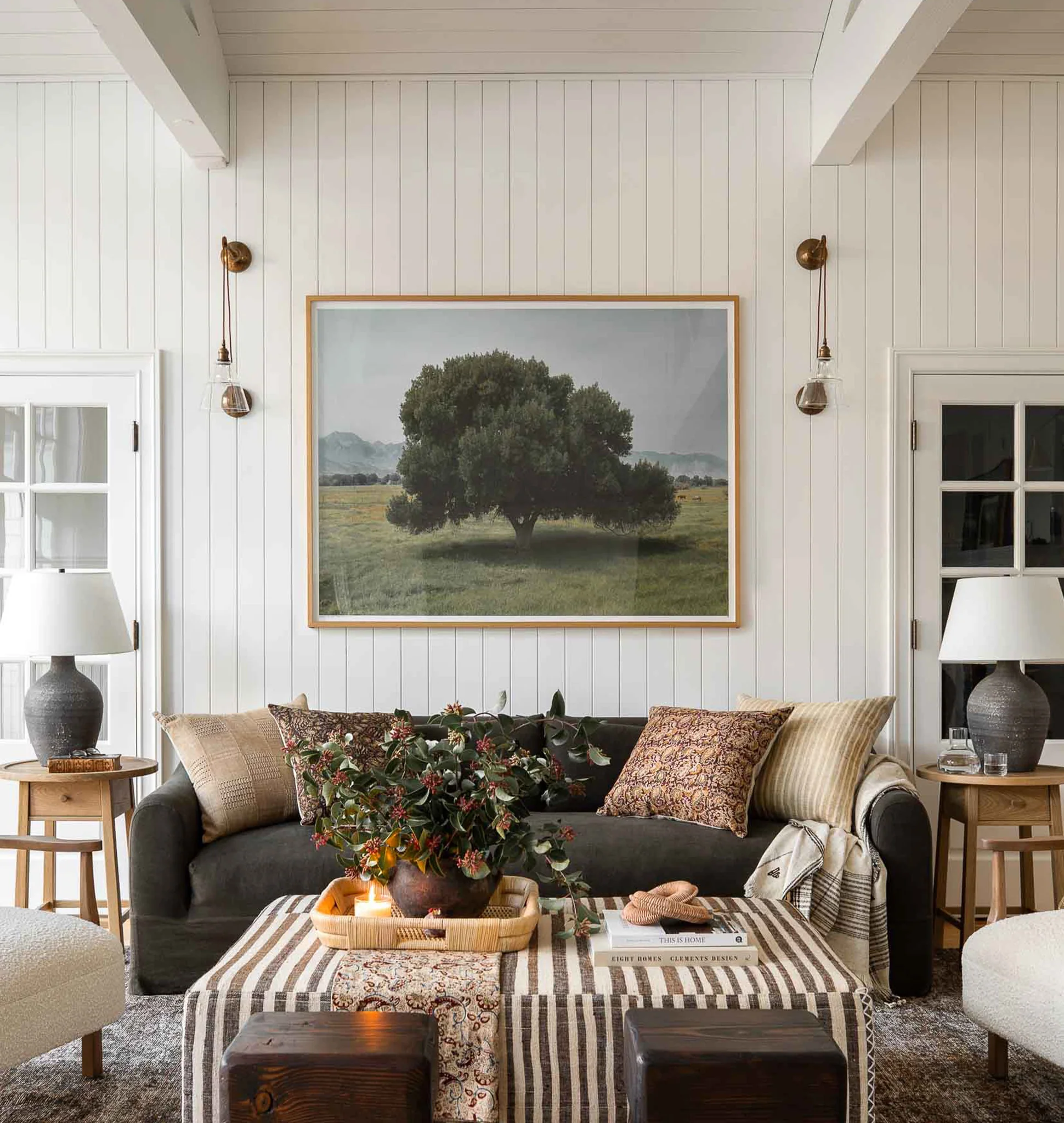
Warm woods in walnut and oak are also trending, used as grounding elements, whether that’s a rustic cutting board styled on open shelving or a vintage tray corralling your candles.
And bouclé? It’s the fabric everyone’s obsessed with right now, popping up on accent chairs and throw pillows with that perfectly cozy-chic vibe.
Now here’s the thing about mixing these materials—it feels expensive because of the contrast. When you pair something plush like velvet with something raw like jute, or place smooth ceramic next to textured bouclé, your eye naturally moves from surface to surface, discovering new details.
That’s the same design trick used in high-end interiors. Variation creates layers, and layers make a room feel collected rather than flat.
And the best part? A $15 chunky throw from HomeGoods does the exact same visual work as a $200 designer version when you style it right.
Cozy Fall Decor on a Budget: Texture Layering Ideas & Examples
1. Layer Neutrals in the Bedroom
If you think neutrals can’t create visual interest, this bedroom will change your mind! The cream upholstered headboard pairs with a burl wood nightstand, bringing in rich grain and warmth.
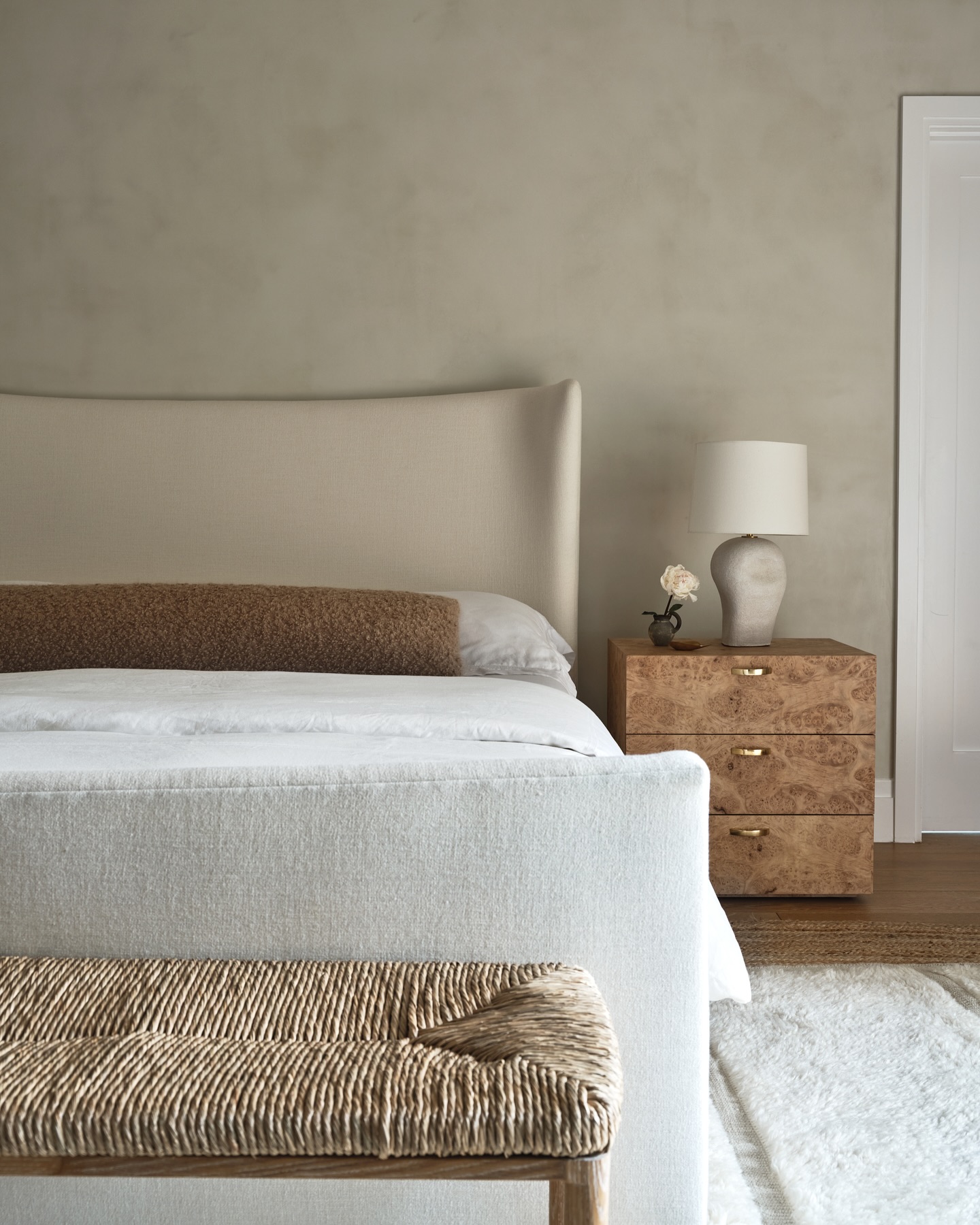
At the foot of the bed, the woven bench holds a textured caramel throw, with a bouclé lumbar pillow that ties all the smooth and rough surfaces together.
2. Mix Wood Tones With Soft Seating
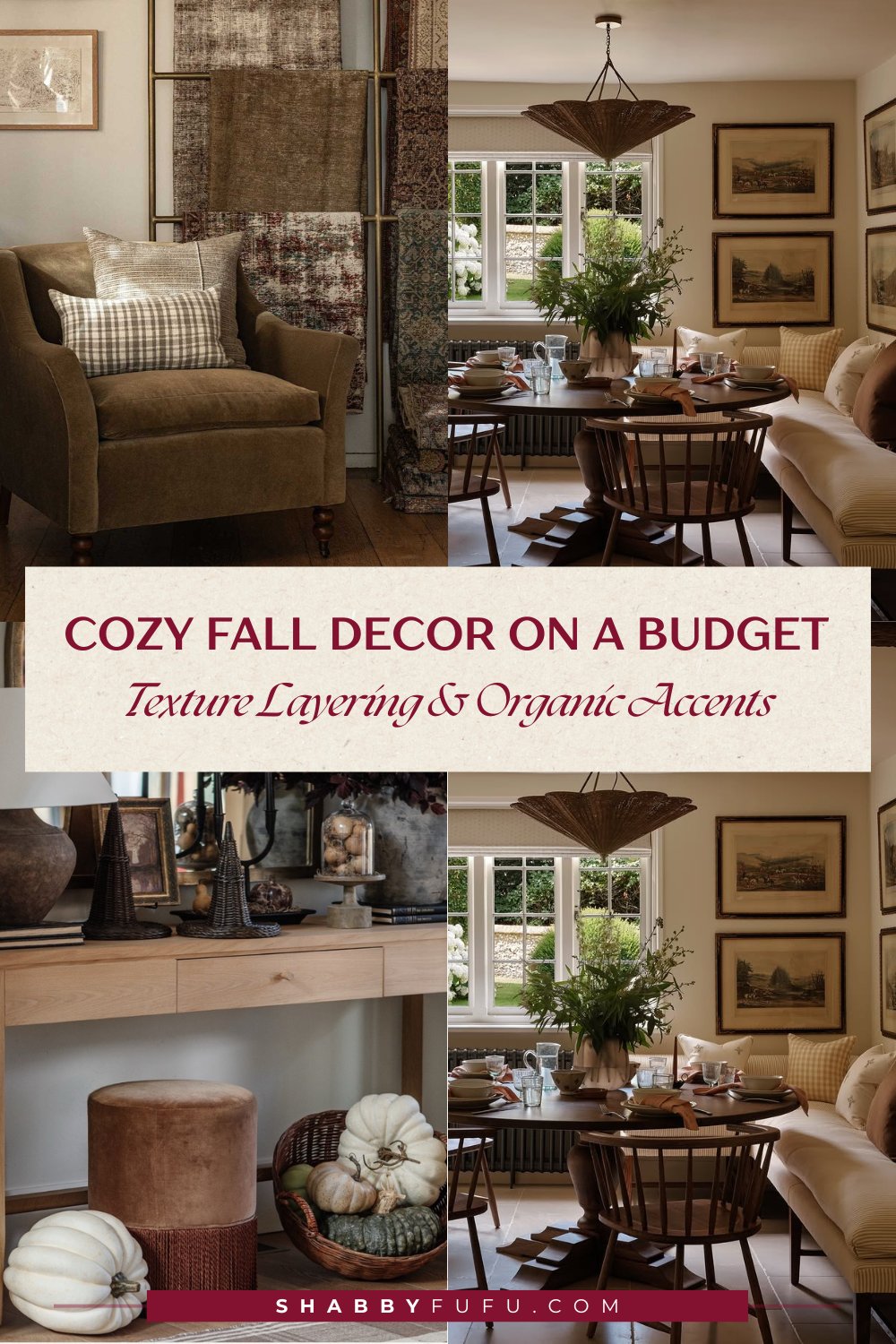
This dining nook shows how to layer different wood finishes without things feeling chaotic. The walnut table anchors the space with its deep tone, while lighter spindle-back chairs add contrast, and a cream banquette with gingham pillows softens all that wood.

Something I just love here is how the woven pendant light overhead echoes the natural textures, too! It creates such a collected and intentional look.
3. Balance Pattern With Natural Materials
When you’re working with bold patterns, going for natural textures and texture layering is your best bet. In this room, the patterned curtains hang against light wood paneling, and the rattan daybed dressed with a chunky navy throw brings in organic warmth.
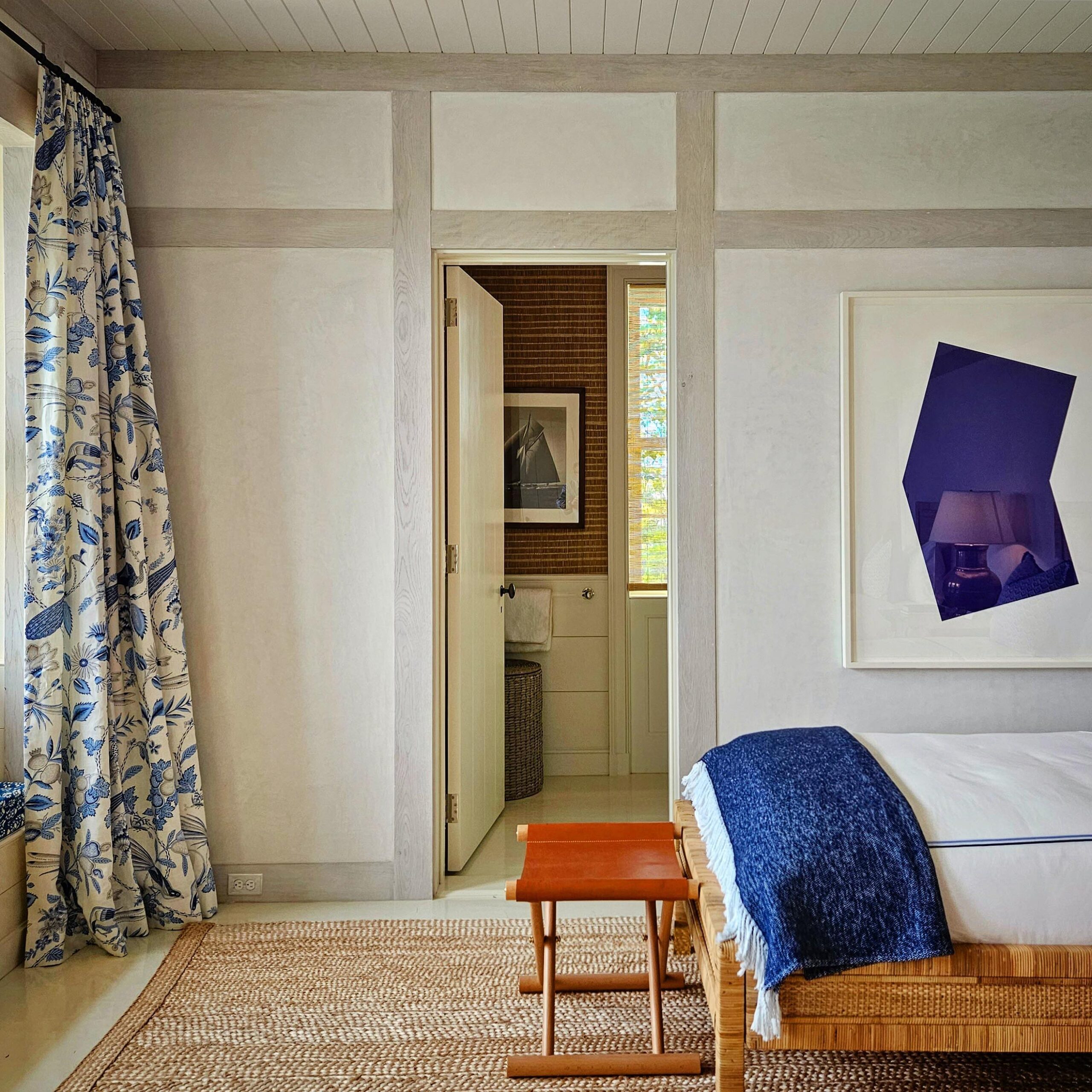
Adding an organic accent is a jute rug and a simple wood stool, which helps to ground the space and lets the pattern shine without overwhelming everything else in the room.
4. Embrace Texture in Unexpected Places
Don’t overlook the bathroom when it comes to texture layering. Just look at this example! Rough plaster walls with visible brushstrokes frame a window niche with warm wood trims, while a weathered wood vanity and jute bath mat pair with an olive clawfoot tub.
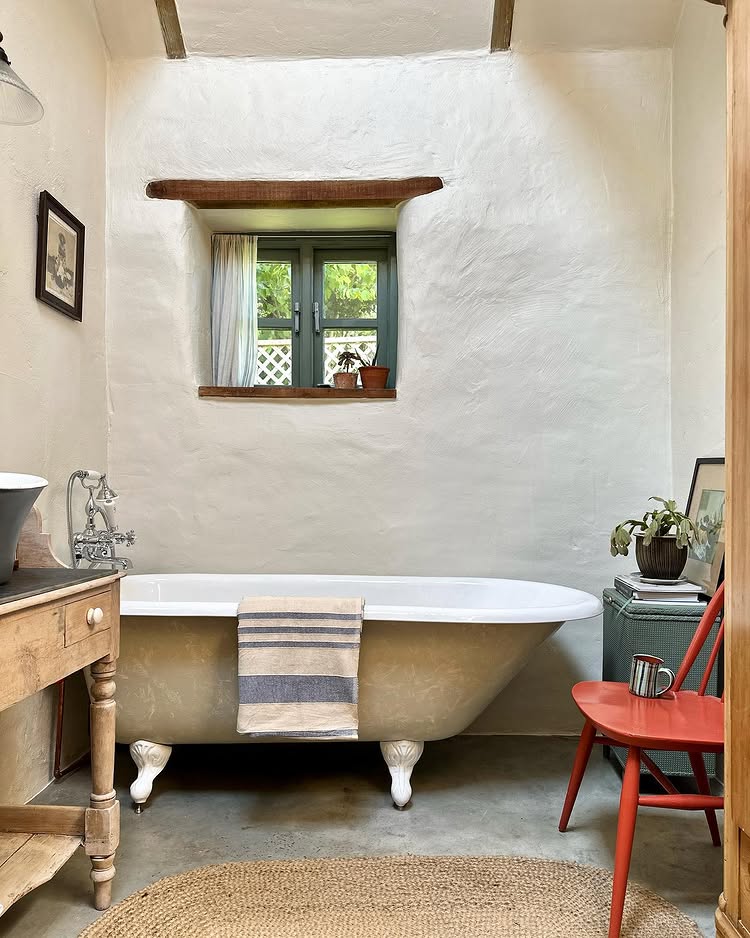
Adding a colorful accent is a coral chair, which works perfectly to give it some vibrancy in this neutral room.
5. Mix Pillows in Different Weaves
If you want an easy entry into texture layering, start with throw pillows. y’all! This living room pairs a cream ribbed pillow with a geometric terracotta pattern and soft sage green, all on a neutral sofa.
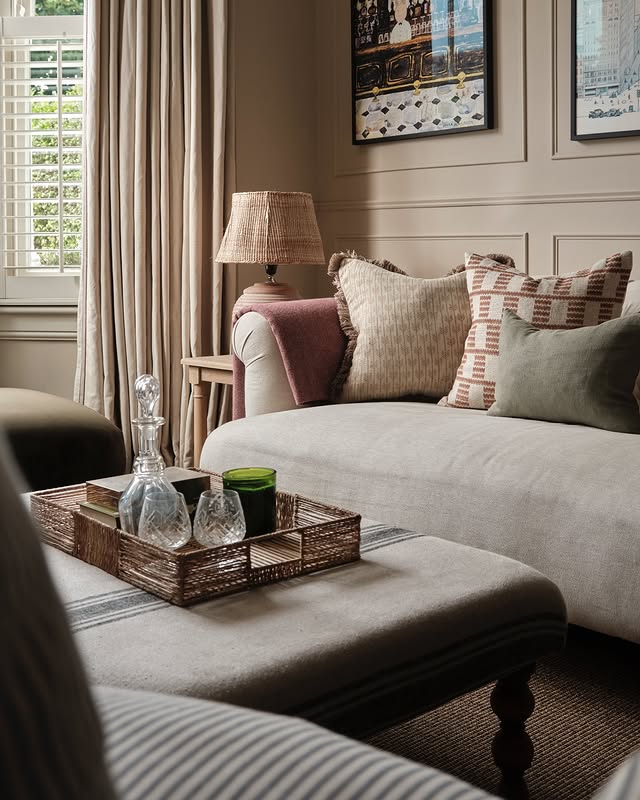
The woven lampshade and rattan tray on the ottoman add more organic texture, and next to the long drapes in a subtle stripe, the look is softened. It’s a masterclass in keeping color calm while letting texture create all the interest!
6. Layer Fall Accents With Varied Textures
This coffee table shows how texture layering works for seasonal styling. A cream sofa gets dressed with plaid pillows and a chunky knit throw in deep burgundy. Adding organic accents rich in texture is a coffee table holding woven trays, weathered pottery, and wooden bowls.
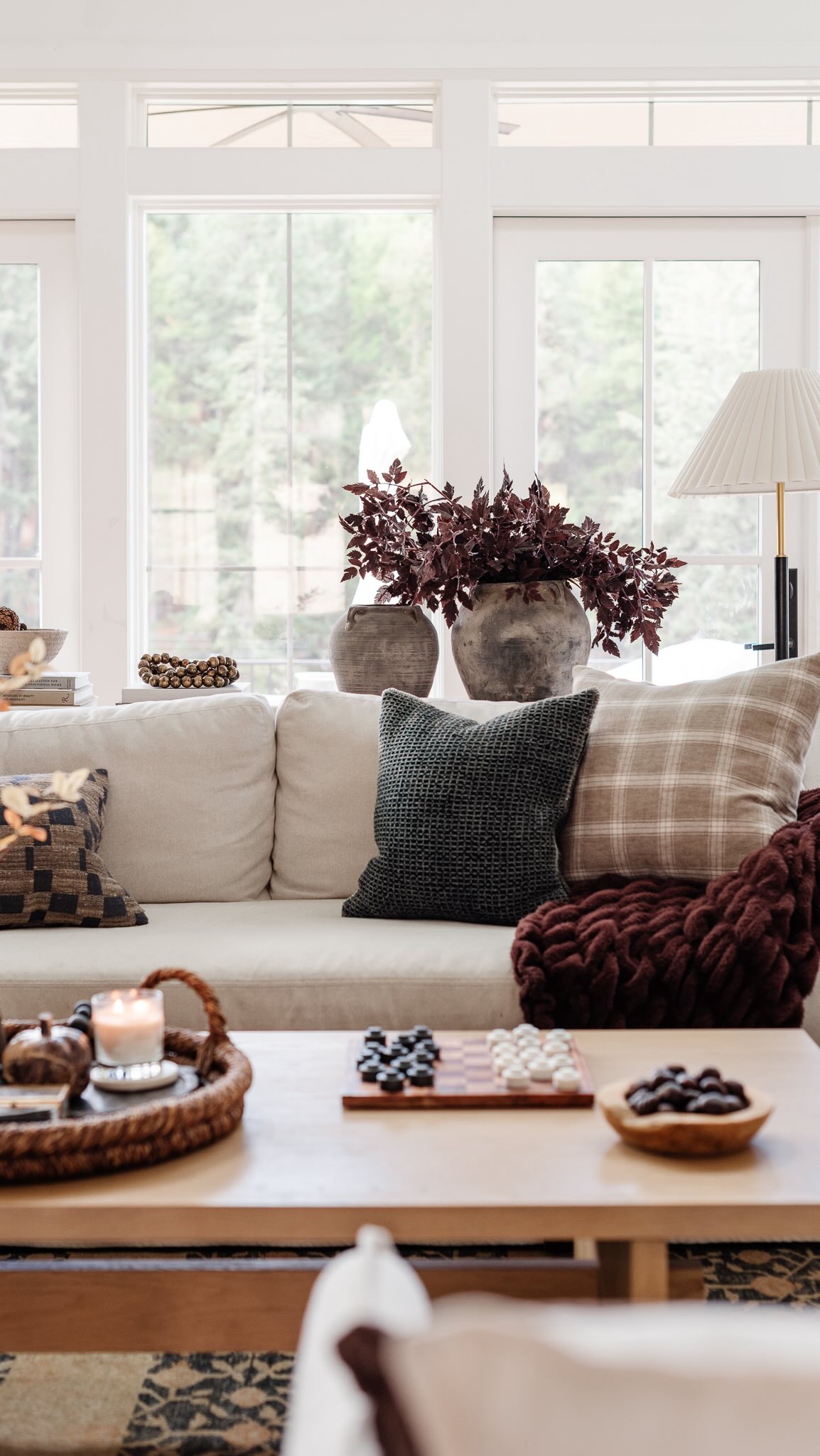
I love how the oversized concrete urns filled with dark foliage in the background add tons of weight and visual drama. Every surface has a different finish—smooth, woven, chunky, weathered—creating such an elevated and cozy space!
7. Style an Entry Console With Textural Contrast
Don’t overlook your entry when it comes to texture layering. This console pairs a light oak finish with a weathered ceramic lamp and woven rattan accents. Dark branches in a gray pottery urn create height, while a velvet ottoman tucked underneath adds softness. Below, woven baskets hold pumpkins and gourds in cream and muted green.
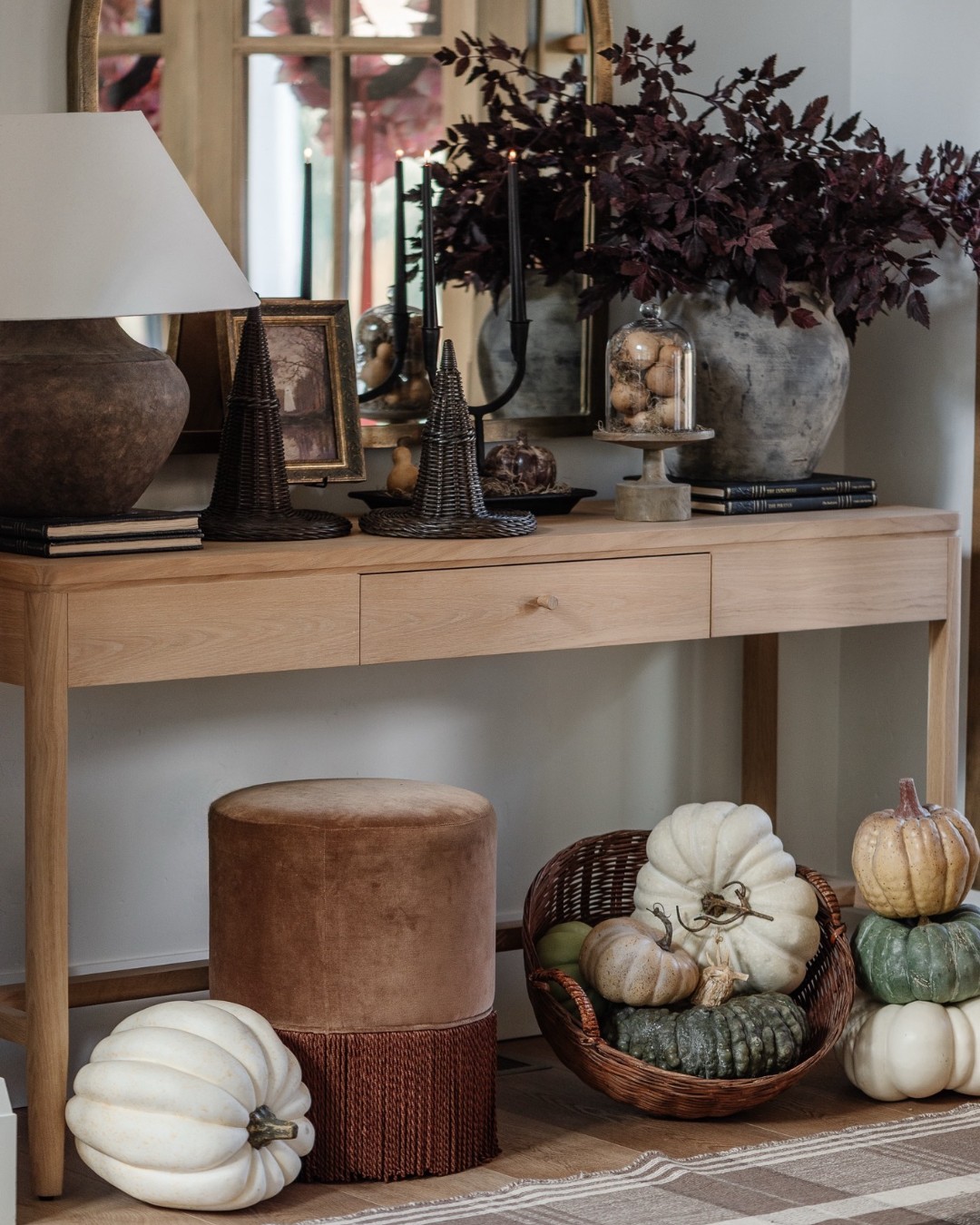
The mix of smooth wood, rough ceramic, soft velvet, and natural wicker makes this vignette feel rich and layered without a single bold color.
8. Mix Linen Bedding With Wood Grain
If you’re keeping your bedroom palette simple, texture layering becomes essential. This space pairs striped navy linen bedding with a light oak headboard and nightstand that show off beautiful wood grain.
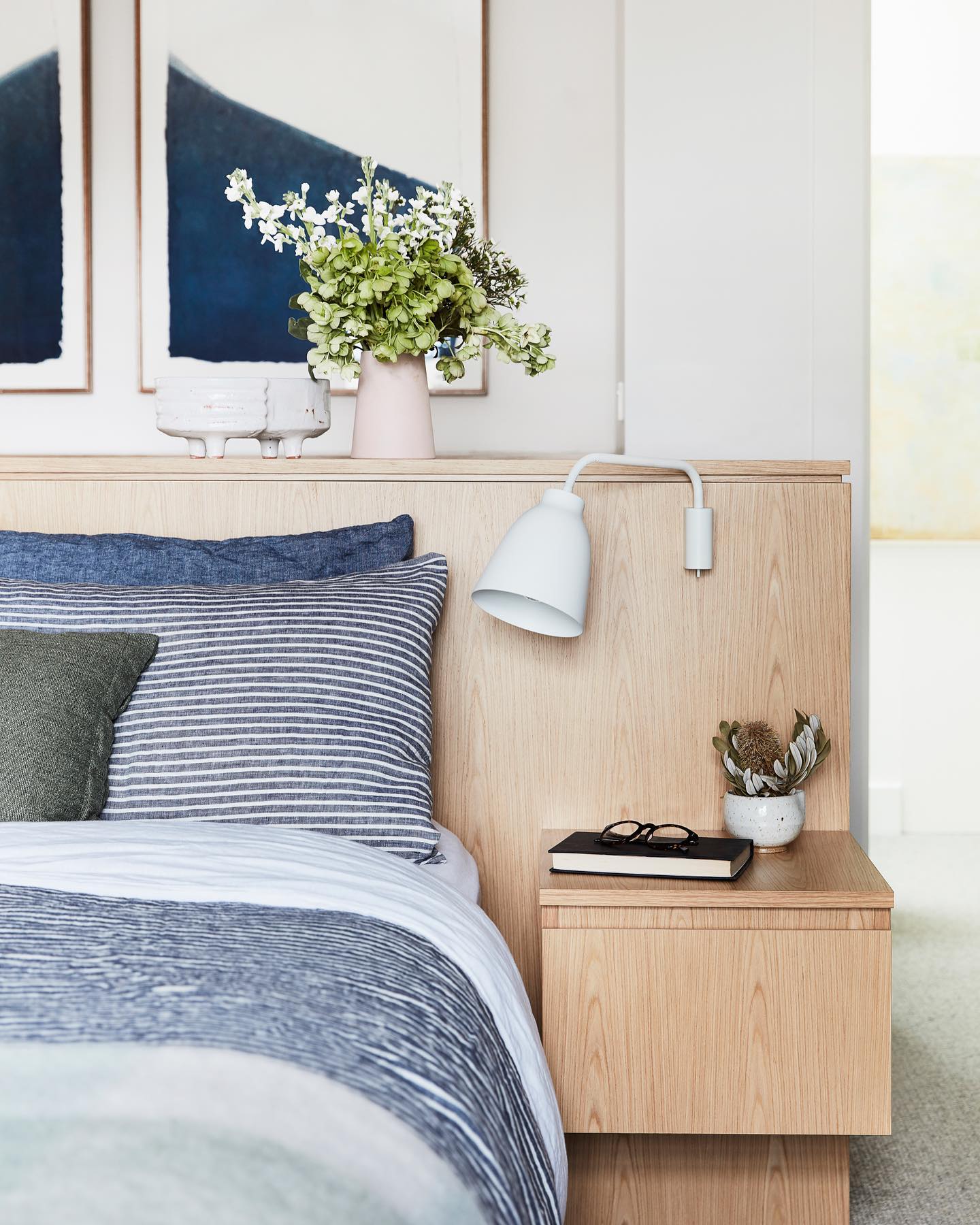
The linen pillows in navy and olive green add soft texture, while the striped duvet creates a pattern without busy color. Fresh greenery in a simple white pitcher brings in organic texture, making the whole space feel calm and layered at the same time.
9. Let Architectural Texture Take Center Stage
This cozy reading corner shows how texture layering works when you’ve got architectural character to play with.
The rough stone fireplace and exposed beams create a dramatic texture on their own, so the cream slipcovered chair, with its ruffled skirt, softens everything up. A chunky knit throw draped over the arm adds another layer, while the jute stair runner and terracotta tile floor introduce more natural textures underfoot.
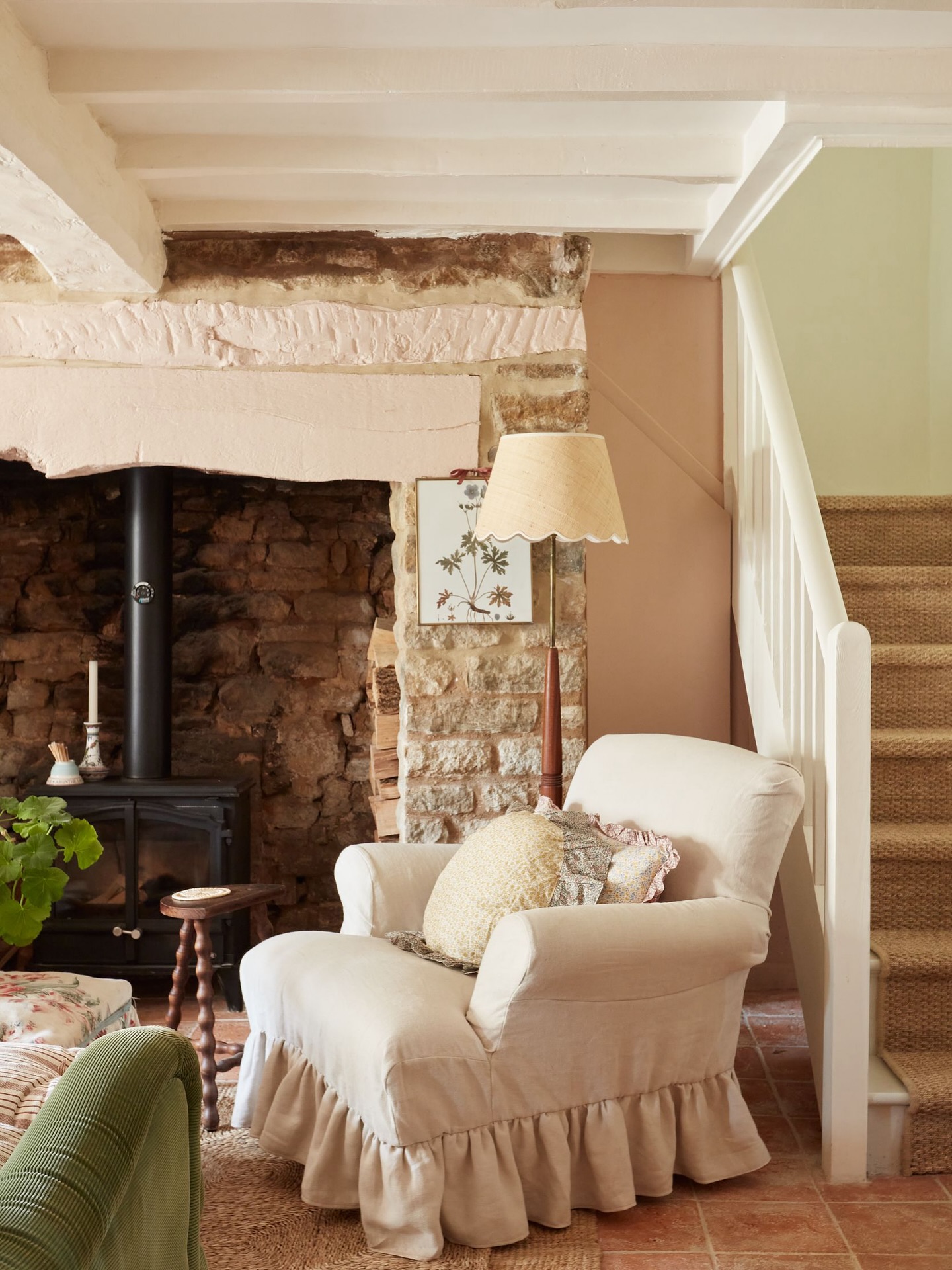
The wood floor lamp and botanical art complete the collected look, proving that when your architecture has texture built in, you just need to layer in softer materials to balance it out.
Styling Tips for a High-End Look
- The Rule of Three: If you want your texture layering to feel intentional instead of random, follow the rule of three. Pick three different textures for any vignette or space—maybe smooth ceramic, rough jute, and soft velvet. This creates enough variety to be interesting without overwhelming the eye. For more about this rule, CLICK HERE.
- Height Variation: Flat surfaces need dimension, and that’s where height comes in. When you’re styling a console table or mantel, vary the heights of your textured pieces to create visual movement. This way of texture layering draws the eye up and around instead of across in a straight line, giving your space more visual interest.
- Color Restraint: Here’s the secret to making texture layering look expensive: keep your color palette tight. Stick to 2-3 neutral tones—maybe cream, warm wood, and soft gray—and let texture do all the heavy lifting. When you’re not competing with lots of color, all those different materials and finishes really shine.
Shabby Budget-Friendly Texture Picks
I’ve rounded up some of my favorite texture-rich finds that won’t break the bank. These pieces work beautifully for fall layering and are versatile enough to use year-round, making them smart investments for your home!
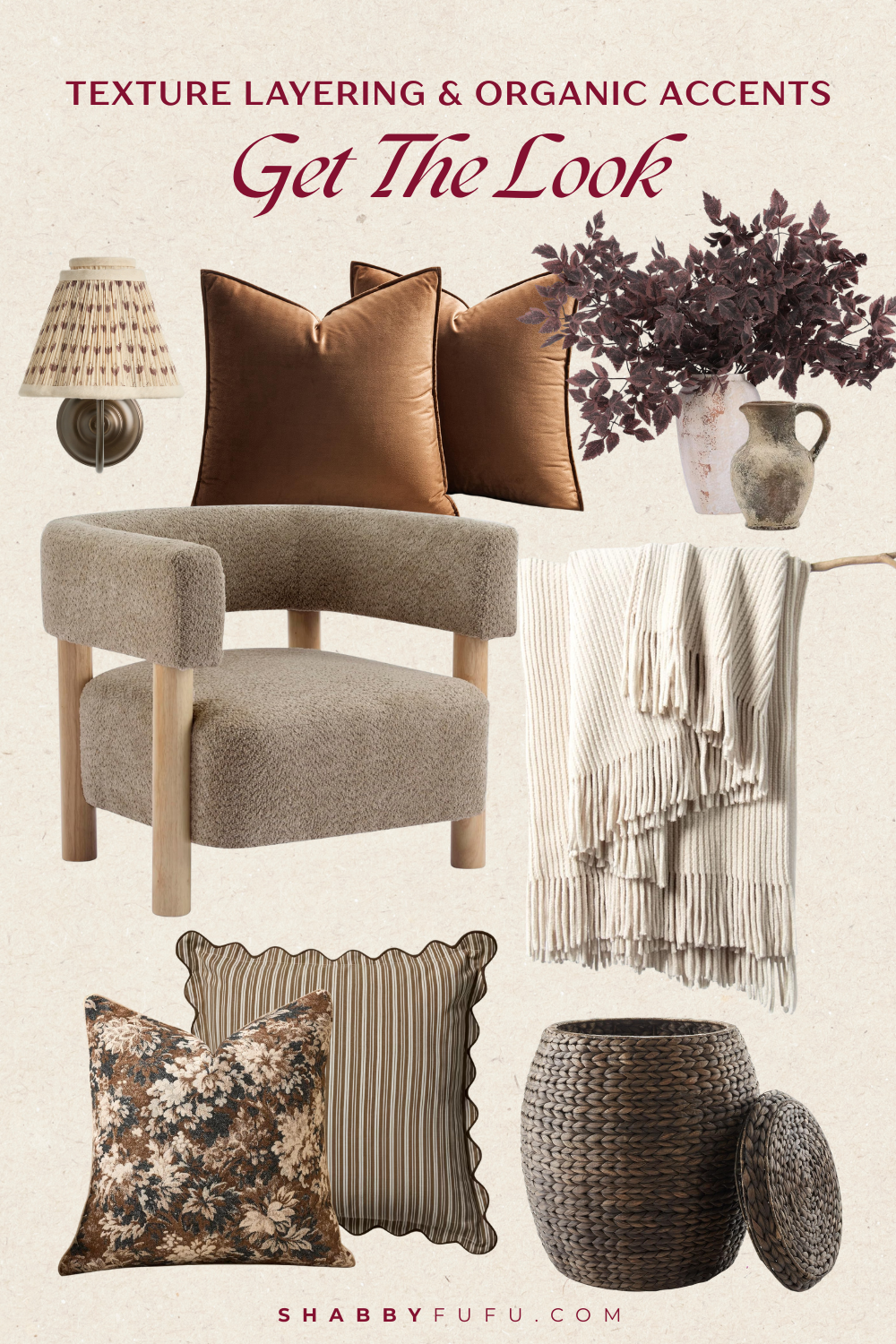
BrowThrow Blanketn Velvet Pillow Covers | Faux Burgundy Branch | Terracotta Vase | Floral Pillow Cover | Storage Basket | Accent Chair | Sconce | Striped Pillow | Throw Blanket
Ready to Try Texture Layering in Your Space?
Now y’all got everything needed to create a cozy and layered fall look without overspending. The key to start playing with texture layering is to start small—grab a chunky throw, add a woven basket, swap out a pillow—and build from there as you find pieces that speak to you and your home!
What’s your favorite texture to work with in the fall? Are you team chunky knit, or do you lean more toward natural materials like jute and wood?
Drop a comment below and share your go-to texture layering trick—I’d love to hear what’s working in your space! And if you try any of these ideas, tag @shabbyfufu in your photos. I’d love to see how y’all are making texture layering your own this season.
Add Sparkle to Your Fall Spread: Glitter Pickles & Fall Dessert Boards
Fall Crafts: Clay Ghosts, Wreaths & Hand-Painted Accents
Inside North Road Home Tour: A Fresh Take on Coastal Farmhouse Style